Should Your Child Keep Their School-Day Routine?
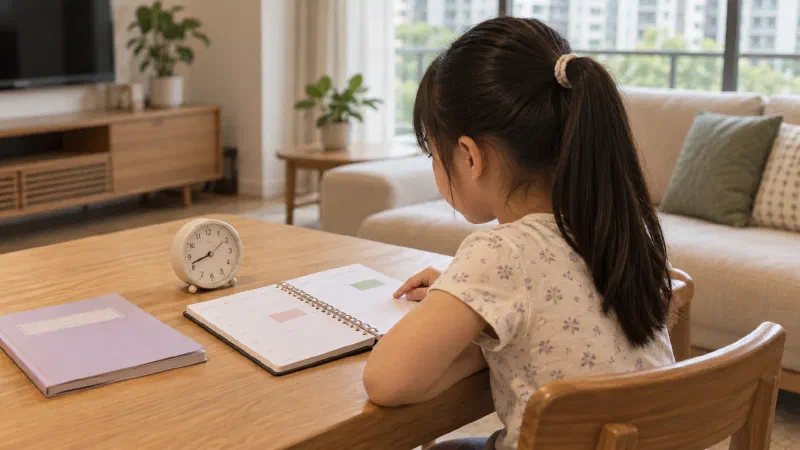
Girl checking a clock beside a lightly filled planner.
The routine can soften without disappearing
A holiday should feel different from a school day. That does not mean every familiar routine must be abandoned.
For a one-week break, keeping a few stable points can protect sleep and make planned revision easier to start. The aim is not to reproduce school at home, but to preserve the parts of the rhythm that continue to help.
Protect the routines that affect the next day
Large shifts in bedtime and waking time can make the return to school harder, particularly near the end of a short break.
Some flexibility is reasonable. The question is whether the new pattern leaves the child rested and able to resume school hours without an abrupt adjustment.
Meal times, movement and a predictable quiet period can also provide useful anchors without turning the day into a timetable.
Place revision where concentration is already likely
If revision is planned, use a time when the child is normally alert. A familiar morning or early-afternoon period may require less negotiation than a different time every day.
Use the existing timetable only as a reference: retain one or two time anchors that help the child begin, then remove the lesson-by-lesson structure that is no longer needed.
This is structure in service of a small amount of work, not a reason to fill the day.
Remove the parts that no longer serve a purpose
The child does not need to wake at the usual time merely to sit through an empty imitation of the school day. Nor do subject periods need to remain in place when there is no useful task for them.
Keep a routine because it supports rest, reduces friction or helps the transition back—not because the clock says the child would normally be in class.
Tighten the rhythm before school resumes
If the schedule has shifted, begin returning to normal before the first school morning. This is more useful than enforcing school hours throughout the entire break.
A good holiday routine gives the child both freedom and a few dependable anchors. Keep what helps the week work, relax what does not and let the holiday remain recognisably different from term time.